

Completely Changing Traditional Mold Manufacturing

How ROMI used MINGDA Tech to reduce costs, increase agility and enhance quality

In this exclusive behind-the-scenes look, learn how Romi is leveraging industrial 3D printing with MINGDA technology to transform manufacturing on the production floor. From rapid design cycles to on-demand mold manufacting, see how innovation meets efficiency in one of the Fortune Global 500 brands.

Our Solutions

Rapid Prototyping

Functional testing, hyper-realistic modeling, and fast results.

Speed Up Your Designs →

Jigs and Fixtures

Strong, versatile materials for fast, custom tool production.

Speed Up Your Designs →

End-Use Parts

Faster, lower-cost production than conventional methods.

Speed Up Your Designs →

Medical Modeling

Patient-specific medical models that improve patient outcomes.

Speed Up Your Designs →

Mold Production

Transform traditional mold making and speed up production.

Speed Up Your Designs →

Sculpture

Precise, hyper-realistic 3D printed sculptures.

Speed Up Your Designs →

Our Offerings

01

3D Printers

Industrial grade, best-in-class 3D printer portfolio, covering the entire value chain from rapid prototyping to additive printing and serial production of end-use parts.

more

02

Filaments

The largest portfolio of polymer 3D printing materials, addressing a wide range of applications as well as functional and performance characteristics.

more

03

Software

Save time and make your workflow easier with intuitive MINGDA Orcaslicer software.

more

04

3D Printing Services


Let us print your parts. From prototypes to end-use parts, supported by unmatched expertise and one of the world's largest in-house industrial additive printing fleets.

more

05

3D Scanner

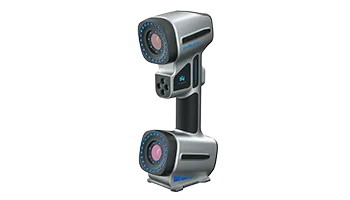
The AcuRayScan now offers improved fine-detail scanning and global control capabilities. Its modular design further expands versatility, providing users with a flexible and efficient multi-scenario solution.

more

High-Quality Products

Enterprises like Insculp3D produces functional and flexible parts with precision and efficiency with MINGDA 3D solutions.

Advanced Technology

Through collaboration with MINGDA 3D, 
JS LIMOUSINE has achieved innovative breakthroughs in the field of 3D printing technology.

Reliable Customer Support

JONITE was provided by MINGDA 3D with solutions that optimize FFF printing technology, to manufacture customized 3D-printed decorative grille.

Strong Industry Reputation

Optimizing cost efficiency through innovative technology while maintaining high reliability is the reason why companies like PATAK Motor have chosen MINGDA 3D.

Complete 3D printing Services

3D Printing Services

Let MINGDA print your parts. From prototypes to end-use parts, supported by unmatched expertise and one of the world's largest in-house industrial additive printing fleets.

Explore More →

Customer Service

Committed to maximum uptime at customers, we offer global support, tailored service solutions, and knowledge & expertise to ensure your success.

Explore More →

Resources

Learn more about the insights and best practices of the Additive Manufacturing technology.

ST Engineering Marine and MINGDA 3D: In-Depth Cooperation for High-Precision Warship Display Models via Industrial-Grade 3D Printing

ST Engineering Marine and MINGDA 3D: In-Depth Cooperation for High-Precision Warship Display Models via Industrial-Grade 3D Printing

In the marine equipment exhibition and industrial model manufacturing sector, MINGDA 3D, with its large-format, high-precision and high-stability industrial-grade 3D printing solutions, has reached a long-term strategic cooperation with ST Engineering Marine (Singapore Technologies Marine), a world-leading marine engineering enterprise. It provides core equipment and technical support for the production of Scale model warship display models, and upgrades traditional ship model manufacturing processes through industrial-grade additive manufacturing technology.     I. Cooperation Background: Military-Grade Display Demand and Efficient Manufacturing Upgrade   As the core marine division of ST Engineering, ST Engineering Marine specializes in the design, construction, retrofitting and marine engineering services of naval vessels. It needs to produce high-precision scaled-down warship models of its independently developed main vessel types, including frigates, patrol vessels, landing ships and unmanned surface vessels. These models are used for international defense exhibitions, client proposal presentations, corporate showroom displays, national defense education and technical exchanges, to visually present the appearance, structure, deck layout, weapon systems and hull design details of vessels.   Traditional warship model production relies on manual processing and CNC cutting, which suffers from pain points such as difficulty in forming complex details, long production cycles, high costs for small-batch customization, and insufficient restoration of curved surfaces and precision components. To meet the stringent requirements of military-grade display models for high precision, consistency and efficient small-batch production, ST Engineering Marine, after multiple rounds of selection and testing, officially purchased MINGDA industrial-grade 3D printing equipment and built a standardized warship model printing production line to realize efficient implementation from design to finished product.   (ST Engineering Staff sample testing)     II. Core Cooperation Content: MINGDA 3D Equipment Empowers the Whole Process of Warship Model Production   ST Engineering Marine has introduced MINGDA’s large-format industrial-grade 3D printer MD-1000D, which is mainly used for integrated printing and detail forming of warship display models at scales of 1:50 to 1:200. It covers the production of all structural components including hull main bodies, deck equipment, hatches and guardrails, and is suitable for the production of various ship models such as frigates, patrol vessels, landing ships and unmanned surface vessels.   1. Equipment Selection and Core Advantages   ● Large-format one-piece forming: The MD-1000D offers an extra-large printing space of 1000×1000×1000mm, enabling one-time printing of large hull main bodies without segmented splicing. This ensures the structural integrity and streamlined precision of the model, perfectly restoring the curved shape of real vessels.   ● Industrial-grade printing precision: Equipped with linear guide rails, closed-loop motors and an all-metal body structure, it delivers stable and controllable printing precision, accurately restoring details such as radar arrays, missile launchers and vents to meet the strict detail restoration requirements for defense exhibitions.   ● 24/7 industrial-grade stable operation: With high-strength hardware design, it supports long-hour continuous printing. It maintains dimensional stability and no warping deformation even when single-model printing exceeds 100 hours, adapting to the long-hour production of complex ship model structures.   ● High-performance material compatibility: Compatible with industrial materials such as PETG-HF and carbon fiber-reinforced filaments, the printed parts feature high strength and good surface finish, facilitating post-processing such as polishing, painting and weathering to present the texture and durability consistent with real warships.   2. Model Production Process   ● 3D data conversion: MINGDA Orca slicer optimizes 3D printing parameters based on ST Engineering Marine’s original CAD design drawings of vessels to ensure 1:1 accurate restoration of model scale and structure.   ● Integrated printing: MINGDA 3D printers batch-print hulls, superstructures and precision components, simplifying traditional manual mold-opening and cutting processes.   ● Post-processing and finishing: Printed parts undergo polishing, filling, painting and logo pasting to restore warship paint and details, and are finally assembled into complete display models.   ● Display and delivery: Finished models are used for international marine defense exhibitions, client negotiations, corporate showrooms and national defense education, serving as core carriers for ST Engineering Marine’s brand display and solution promotion..     III. Cooperation Value: Additive Manufacturing Reshapes the Production Paradigm of Ship Display Models   This cooperation is a benchmark application of industrial-grade 3D printing technology in the military and marine display field, bringing significant efficiency and quality improvements to ST Engineering Marine:   ● Efficiency leap: Model production cycle is shortened by more than 60%, quickly responding to urgent needs such as exhibitions and client customization, and supporting simultaneous production of multiple ship models.   ● Cost optimization: Eliminates traditional mold-opening costs, greatly reduces small-batch customization costs, and eliminates repeated processing for complex structural components.   ● Quality breakthrough: Comprehensive improvement in detail restoration and dimensional consistency, making models more compliant with military-grade display standards and enhancing the brand’s professional image.   ● Flexible production: Quickly adapts to the production of models of different vessel types and scales, supporting design iteration and rapid revision.       IV. Long-Term Outlook: Technical Collaboration Empowers Marine Industrial Innovation   MINGDA 3D and ST Engineering Marine will further deepen their strategic cooperation, focusing on core scenarios such as ship model manufacturing. Leveraging its large-format, high-precision industrial-grade 3D printing solutions, MINGDA 3D will support ST Engineering Marine in creating high-quality ship display models, helping it continuously consolidate its global leading edge in the R&D, display and services of marine equipment. MINGDA 3D will also deepen its layout in high-end industrial sectors including marine engineering and military industry, empowering the digital and intelligent upgrading of traditional industrial manufacturing with its cutting-edge core technologies.  

Boeing Overseas Factory Partners with MINGDA 3D, MD-600D Industrial FDM 3D Printer Supports Large-Scale Tooling Fixture Production

Boeing Overseas Factory Partners with MINGDA 3D, MD-600D Industrial FDM 3D Printer Supports Large-Scale Tooling Fixture Production

Amid the rapid development of aerospace manufacturing and the growing demand for high-precision components, the aircraft manufacturing industry is facing unprecedented challenges in tooling development. By deploying the MD-600D industrial-grade FDM 3D printer for Boeing's Malaysia facility, MINGDA 3D has helped upgrade its intelligent production, successfully breaking through the limitations of traditional manufacturing in production cycle, cost and structural complexity. This case will analyze in depth how Boeing Malaysia Facility realizes flexible customized production of aerospace tooling fixtures and jigs with large-format additive manufacturing technology, laying a solid foundation for direct production of end-use parts in the future.   As a critical part of Boeing's global supply chain, the Boeing Malaysia facility specializes in the advanced manufacturing and assembly of commercial aircraft components, strictly adhering to Boeing's worldwide standards for safety, precision, and quality. Following a rigorous evaluation of industrial 3D printing solutions, the facility ultimately selected MINGDA's MD-600D printer to enhance manufacturing flexibility, reduce production lead times, and optimize operational efficiency—core priorities in modern aerospace manufacturing.   The MD-600D is a professional industrial FDM 3D printer designed for large-scale, high-precision projects, perfectly suited to meet the stringent requirements of aerospace manufacturing. With a large build volume of 600×600×600mm, the printer enables one-piece printing of large components without complex assembly, reducing potential errors. Equipped with dual extruders, a fully enclosed metal structure and closed-loop stepper motors, the MD-600D delivers exceptional precision (±0.2mm or ±0.002mm/mm) and stability, even during long-duration continuous printing – critical for aerospace-grade component manufacturing.   After equipment delivery, MINGDA 3D immediately dispatched professional technical engineers to Boeing Malaysia Facility, providing one-on-one, full-process hands-on training for the on-site operation team. The training covered equipment installation and commissioning, parameter setting, material replacement, daily maintenance and troubleshooting, ensuring every operator could use the MD-600D printer proficiently and safely.   The relevant person in charge of Boeing Malaysia Facility spoke highly of the training:"We sincerely appreciate the professional guidance and patient training from the MINGDA 3D engineering team. Their technical support is helpful and meticulous, and has provided tremendous help for us to quickly master the 3D printing equipment and smoothly carry out the printing of tooling fixtures and aircraft models. With such reliable technical support, we are full of confidence in expanding applications and even directly printing end-use parts in the future.     In the initial stage, Boeing Malaysia Facility uses the MD-600D printer to produce tooling fixtures and aircraft models – two key application scenarios in aerospace manufacturing. As core tools for precise assembly and positioning of aircraft components, tooling fixtures can be quickly and cost-effectively printed in customized and complex structures with the MD-600D, replacing the time-consuming and inflexible traditional manufacturing processes. Aircraft models, mainly used for design verification, personnel training and demonstration, will accurately replicate intricate aircraft details thanks to the printer's high precision and compatibility with various engineering filaments.   (Printed by MD-600D)   Beyond current applications, this collaboration holds enormous long-term potential. Boeing Malaysia Facility has expressed its intention to expand the application scope of MINGDA D-series machines in the future to directly print end-use aircraft parts – a testament to the printer's reliability and superior performance, as well as MINGDA 3D's expertise in aerospace-grade additive manufacturing. This transition aligns perfectly with the global aerospace industry trend of advancing 3D printing technology from prototyping to mass production of end-use parts, achieving higher efficiency, lower costs and more innovative design.   "We are honored to partner with Boeing Malaysia Facility and support its advanced manufacturing goals," said a representative of MINGDA 3D. "Our machines are designed to meet the most stringent industrial standards, and adoption by a global industry leader like Boeing is a strong recognition of our technical capabilities. We look forward to working closely with the Boeing team to explore more applications from tooling fixtures, aircraft models to end-use parts."   For Boeing Malaysia Facility, the introduction of MINGDA 3D's MD-600D printer is a strategic step to enhance manufacturing agility.   "As we continue to optimize our production processes, advanced additive manufacturing solutions like the MD-600D are crucial for us to meet evolving market demands," said a representative of Boeing Malaysia Facility. "MINGDA 3D's technology offers the precision, speed and flexibility we need to streamline operations, and we look forward to expanding its use to end-use parts in the future."  

Sonora is poised to manufacture the first electric car made in Mexico; BMC presents the ShowCar, its prototype vehicle with MINGDA MD-1000D

Sonora is poised to manufacture the first electric car made in Mexico; BMC presents the ShowCar, its prototype vehicle with MINGDA MD-1000D

With an initial investment of $115 million, the Sonora-based company could launch its first units   Hermosillo, Sonora—With an initial investment of $115 million and plans to commence production between late 2027 and early 2028, Sonora is poised to become the birthplace of Mexico's first electric vehicle manufactured using 3D printing technology.   Beyond Shared Mobility (BMC) announced this news during the official unveiling of its ShowCar. This ShowCar—a non-functional concept prototype—showcases the powerful production capabilities and large format of the MINGDA MD-1000D and marks a significant milestone for the domestic automotive industry.   (Sonora is poised to manufacture the first electric car made in Mexico with MINGDA MD-1000D; BMC presents the ShowCar, its prototype vehicle. Photo: Amalia Escobar)   Beyond Shared Mobility, considered the first company in Latin America to apply 3D printing to automotive development, whichwill focus on a predominantly Mexican supply chain, with the goal of integrating at least 80 suppliers from Sonora that currently supply automotive plants in various regions of the world.   The project, conceived, designed, and developed in Sonora, is part of a long-term industrial strategy focused on sustainable mobility, the energy transition, and strengthening the national automotive ecosystem.   The company's founding partners, María Elena Gallego Lechuga and Miguel Ángel Bravo, presented the project's progress to the Governor of Sonora, Alfonso Durazo Montaño, highlighting the advancements achieved since its inauguration on October 24th.   With the unveiling of the ShowCar, BMC has gone from a promise to a tangible reality, completing the first physical version of its flagship vehicle in record time—a vehicle that until now existed only as a design concept. By utilizing the An Intelligent and Easy-to-Operate Industrial-Grade 3D Printer MINGDA MD-1000D, they successfully transformed conceptual ideas into actual prototypes.   (The project, conceived, designed, and developed in Sonora, incorporates the fast 3D printing technology of the MINGDA MD-1000D.,is part of a long-term industrial strategy focused on sustainable mobility, the energy transition, and strengthening the national automotive ecosystem. Photo: Amalia Escobar)   The concept car allows the project's potential to be communicated, reduces the uncertainty inherent in complex automotive developments, and fosters dialogue with key stakeholders from the public sector, industry, academia, and society.   Although the ShowCar is not yet a production vehicle, it represents the foundation for the development of the first functional prototype, which is scheduled to begin in early 2026 and will be unveiled at the most important international automotive exhibition.     This progress also reflects the support of the Sonora State Government and aligns with public policies such as the Mexico Plan and the Sonora Sustainable Development Plan, which aim to consolidate a Mexican electric vehicle industry with a national identity and global reach.   The initiative reinforces the vision that Mexico must promote its own projects, capable of generating investment, employment, innovation, and technological development.   Beyond Shared Mobility is also emerging as an early opportunity for investors and financial players interested in a project with high scalability potential, backed by industrial experience and strategically located in one of the regions with the greatest potential for electromobility in North America. They stated that they plan to establish a dedicated MINGDA 3D Printing Laboratory in the future, acquiring additional MINGDA 3D printers to pursue new industry developments using technologies positioned closer to the cutting edge.   The project maintains a close relationship with the Hermosillo Institute of Technology (ITH), within the framework of a national agreement between Grupo Collectron and the National Technological Institute of Mexico, which promotes the Dual Education model and has already begun its first phase at BMC's facilities,and plans are underway to acquire additional MINGDA 3D printers to enhance productivity.   (Sonora is poised to manufacture the first electric car made in Mexico; BMC presented its non-functional concept ShowCar. Photo: Amalia Escobar)   The company also seeks to open a direct dialogue with federal agencies responsible for industrial, energy, and mobility policy to analyze public-private partnership models that will allow these types of initiatives to scale up for the benefit of the country.   In parallel, the creation of BMC Arizona is being evaluated, with the intention of establishing the first binational electric mobility company born in Mexico, leveraging the advantages of the Sonora-Arizona megaregion and the USMCA framework with Industrial-Grade High Intelligence 3D Printer MINGDA MD-1000D.   For Beyond Shared Mobility, the push for electric mobility should not be limited to the adoption of imported technologies, but rather to the development of its own capabilities aligned with national priorities and the public interest.   In this sense, the ShowCar which is printed by MINGDA MD-1000D represents the first firm step for a land transportation concept to begin becoming a reality developed in Sonora, for Mexico, Latin America, and the world..   This article is reprinted from Eluniersal.  

Space X and MINGDA 3D Collaborate to Advance Large-Format Additive Manufacturing in Aerospace Applications

Space X and MINGDA 3D Collaborate to Advance Large-Format Additive Manufacturing in Aerospace Applications

As the aerospace industry continues to accelerate toward higher launch frequencies, shorter development cycles, and more cost-efficient production models, manufacturing technologies are being pushed to their limits. In this highly demanding environment, additive manufacturing is evolving from a prototyping tool into a critical component of aerospace production systems.   Against this backdrop, MINGDA 3D has established a technical collaboration with Space X, supporting its aerospace manufacturing operations through the application of the MD-1000D large-format industrial FDM 3D printer. This collaboration reflects the increasing recognition of large-scale additive manufacturing as a strategic enabler for next-generation aerospace engineering.   Addressing Aerospace Manufacturing Complexity with Additive Manufacturing   Aerospace manufacturing presents some of the most complex challenges in modern industry. Components and tooling must meet strict requirements for dimensional accuracy, structural stability, repeatability, and material performance, while development timelines continue to shorten. Traditional manufacturing methods often rely on complex tooling, long outsourcing cycles, and high upfront costs—particularly for large components, customized fixtures, and low-volume functional parts.   Large-format industrial 3D printing offers a compelling alternative. By eliminating the need for molds and enabling direct digital-to-physical production, additive manufacturing allows aerospace manufacturers to respond rapidly to design changes, accelerate validation processes, and reduce overall production costs.   The MD-1000D was developed precisely to meet these industrial demands. With its expansive build volume, rigid mechanical structure, and industrial-grade motion control system, the MD-1000D enables the production of large, dimensionally stable components with consistent accuracy, even during long-duration printing tasks.   Turbine fan blade model printed by MD-1000D   MD-1000D Applications within Space X Manufacturing Workflows   Within Space X’s manufacturing and development environment, the MD-1000D is applied across multiple use cases, supporting both engineering development and production preparation. Typical applications include the fabrication of large-scale functional components, assembly jigs, fixtures, positioning tools, and auxiliary manufacturing aids used throughout the aerospace production process.   By utilizing additive manufacturing, Space X engineers are able to significantly shorten iteration cycles, producing customized tooling and test components in-house rather than relying on external suppliers. This capability enhances manufacturing flexibility, protects sensitive design data, and enables rapid optimization during testing and validation phases.   The MD-1000D’s ability to produce complex geometries in a single build allows for functional integration, reducing assembly steps while improving structural consistency. At the same time, lightweight design optimization helps minimize material usage without compromising mechanical performance—an essential consideration in aerospace applications.   Aircraft model printed by MD-1000D   Industrial Stability and Repeatability at Large Scale   One of the most critical requirements in aerospace manufacturing is process stability. Large-format additive manufacturing introduces unique challenges related to thermal management, structural deformation, and long-duration consistency. The MD-1000D addresses these challenges through a combination of robust mechanical engineering and advanced process control.   Its rigid frame design minimizes vibration and deformation, while optimized thermal systems ensure stable material deposition across large build areas. This enables repeatable, production-grade output, even for large and structurally demanding components.   By delivering consistent initial accuracy and reliable long-term performance, the MD-1000D allows additive manufacturing to move beyond experimental use and into standardized industrial application within aerospace production systems.   Strategic Significance for the Future of Aerospace Manufacturing   The collaboration between MINGDA 3D and Space X reflects a broader shift within the aerospace sector. As launch systems become more complex and production volumes increase, manufacturers are seeking technologies that offer speed, flexibility, and scalability without sacrificing precision.   Large-format industrial 3D printing is increasingly viewed as a foundational technology for this transformation. It enables distributed manufacturing, rapid response to engineering changes, and cost-effective production of specialized components—all essential capabilities for modern aerospace operations.   By integrating the MD-1000D into real-world aerospace manufacturing workflows, MINGDA 3D demonstrates its ability to support high-end industrial users operating at the forefront of technological innovation.   Conclusion   As aerospace manufacturing continues to evolve toward faster, more agile, and more efficient production models, large-format additive manufacturing will play an increasingly vital role. The application of the MINGDA 3D MD-1000D within Space X’s manufacturing ecosystem highlights the practical value of industrial-grade 3D printing in one of the most demanding engineering fields in the world.   MINGDA 3D remains committed to advancing additive manufacturing technologies that empower high-end industries—from aerospace to energy and advanced manufacturing—to unlock new levels of efficiency, precision, and design freedom. Through collaborations such as this, additive manufacturing continues to move closer to the core of industrial production, shaping the future of how complex systems are built.